In Ayurveda, dosha refers to the three fundamental energy principles—Vata (movement), Pitta (energy), and Kapha (stability)—that govern how the body and mind function. While the Sanskrit word dosha literally means “fault” or “something that can go wrong,” in Ayurveda it does not mean a personal mistake. Instead, it describes functional imbalances in the body–mind system.
Ayurvedic context: Here, dosha refers to biological energies or functional states that arise from the five elements (air, water, fire, earth, space).
Types of doshas:
Each person has a unique balance of these three, called their Prakriti (constitution). Health in Ayurveda means keeping these energies in balance.
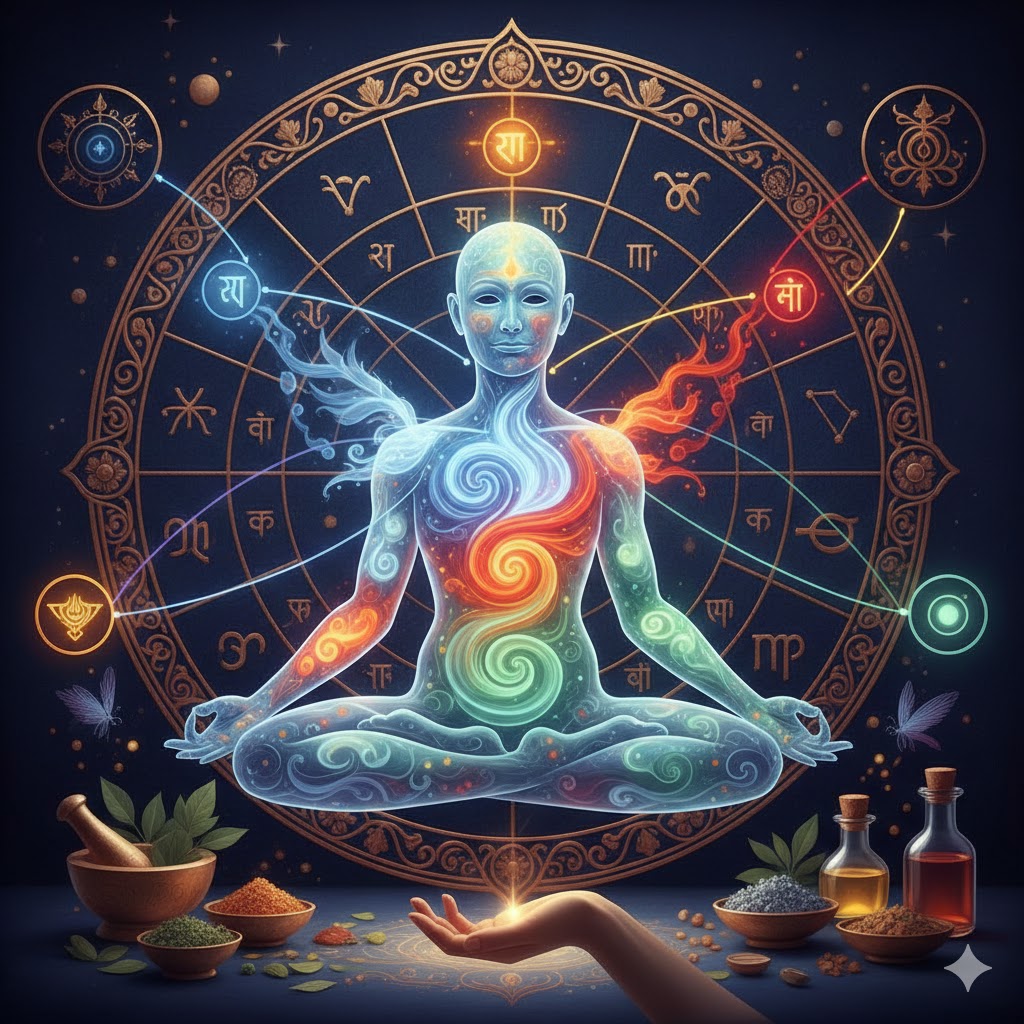
The aim of Ayurvedic Astrology is to correlate the mind-body constitutions of Ayurveda with the planetary types of Vedic astrology. The determination of a person’s individual constitution (Prakriti) is considered the most important factor behind correct physical and psychological treatment. The overall birth chart relates primarily sharira or the physical body and is the baseline of persons’s basic health and balance.
For determining the Ayurvedic type of a person through the birth chart, the following factors are considered the most important:
The foundation of this correlation is the three Doshas and their corresponding planetary rulers:
| Dosha (Biological Humor) | Planetary Rulerships | Characteristics |
|---|---|---|
| Vata (Air/Wind) | Saturn, Mercury, Rahu. | Cold, dry, and nervous; represents the principle of energy or movement/change. Mercury relates to Vata’s positive side of movement and Saturn relates to its negative side of entropy and decay. |
| Pitta (Fire/Bile) | Sun, Mars, Ketu. | Hot and penetrating; represents the principle of light or combustion/transformation. |
| Kapha (Water/Phlegm) | Moon, Venus, Jupiter. | Cold and damp; represents the principle of matter or preservation |
The overall planetary type is generally determined by the main planet that dominates the constitutional and health factors in the chart, whether this is achieved through rulership or through aspect (Drishti).
In Vedic Astrology, all planets cast a full-strength aspect on the 7th house from their position. However, three planets, which are Mars, Jupiter, and Saturn, have full special aspects (Drishti).
These three planets are particularly important in determining the planetary type because they have more full aspects than the other planets, making them more likely to aspect both the Ascendant and its lord:
The dominance of a special aspecting planet usually determines the final dosha classification:
In this case, the influence of a planet’s aspect is considered to have the same intensity and value as the planet occupying a house. While the Ascendant and its Lord are the primary factors defining the constitution, the special aspects of the major planets actively inject their own characteristics, thus dominating the determination of the final Prakriti.
When the primary doshas are in their baseline states, they give life to the body. However, in their disturbed or out-of-balance states, they become the cause of the disease. Unbalanced doshas are dosas that are aggravated due to external factors, lifestyle, or the progression of a chronic condition
If you visit an Ayurvedic practitioner during this stage of unbalanced dosha, he/she will examine the Nadi (pulse) and find out what dosha is aggravated. Based on the diagnosis, a regimen of Ayurvedic medicines, abhyangas and tailored Ayurvedic diet is prescribed to pacify and ground the disturbed energy, i.e., aggravated dosha. Although the Ayurvedic practitioner tries to gauge your (i.e. the patient’s) base prakriti, it helps a lot if the practitioner is aware of the base prakriti as per the horoscope. Then the regimen will not just be about pacifiying the aggravation but to optimise healing efforts by distinguishing between temporary disturbances and your fundamental nature.
Contact Information | Need Help? | Frequently Asked Questions | Astrology Glossary | Sitemap | RSS Feeds
© Copyright 2014-2022, Abhilasha and Kshitij Sharma. All right reserved. Terms of Use.

 VEDIC ASTROLOGY
No comments yet. You should be kind and add one!
The comments are closed.